South Korea
Seoul's royal palaces, the East Sea coast, hanok streets in Jeonju, volcanic Jeju, Busan's fish market and Silla-era Gyeongju.
South Korea packs royal palaces, mountain coastlines, a volcanic island and two thousand years of history into a country you can cross by fast train in a few hours.
Seoul
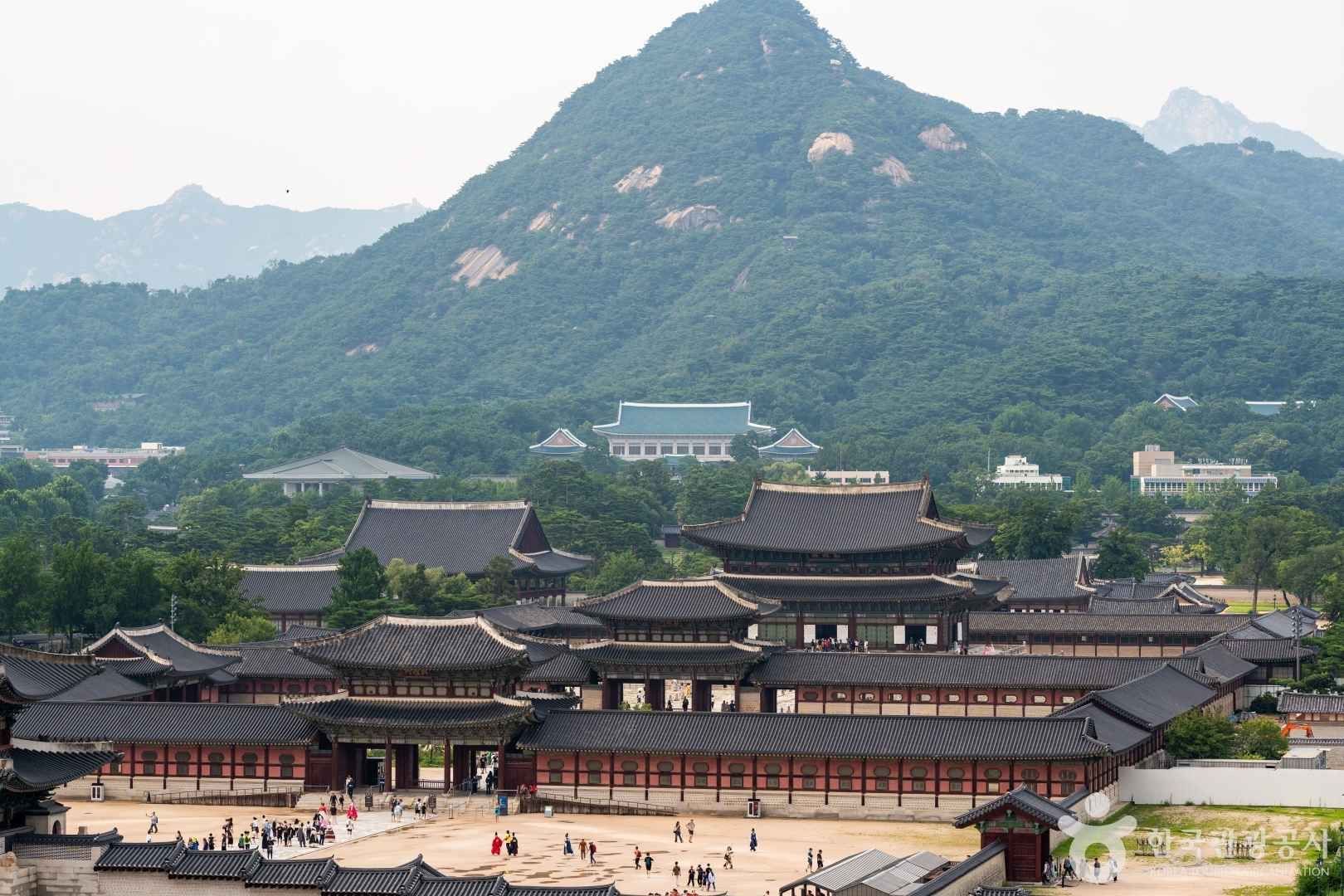
The capital grew around Gyeongbokgung, the largest of its five royal palaces, built in 1395 for the Joseon dynasty. In front of it, Gwanghwamun Square runs along Sejong-ro, with statues of King Sejong and Admiral Yi Sun-sin. N Seoul Tower, on Namsan mountain, has an observatory with views over the whole city.
The east coast
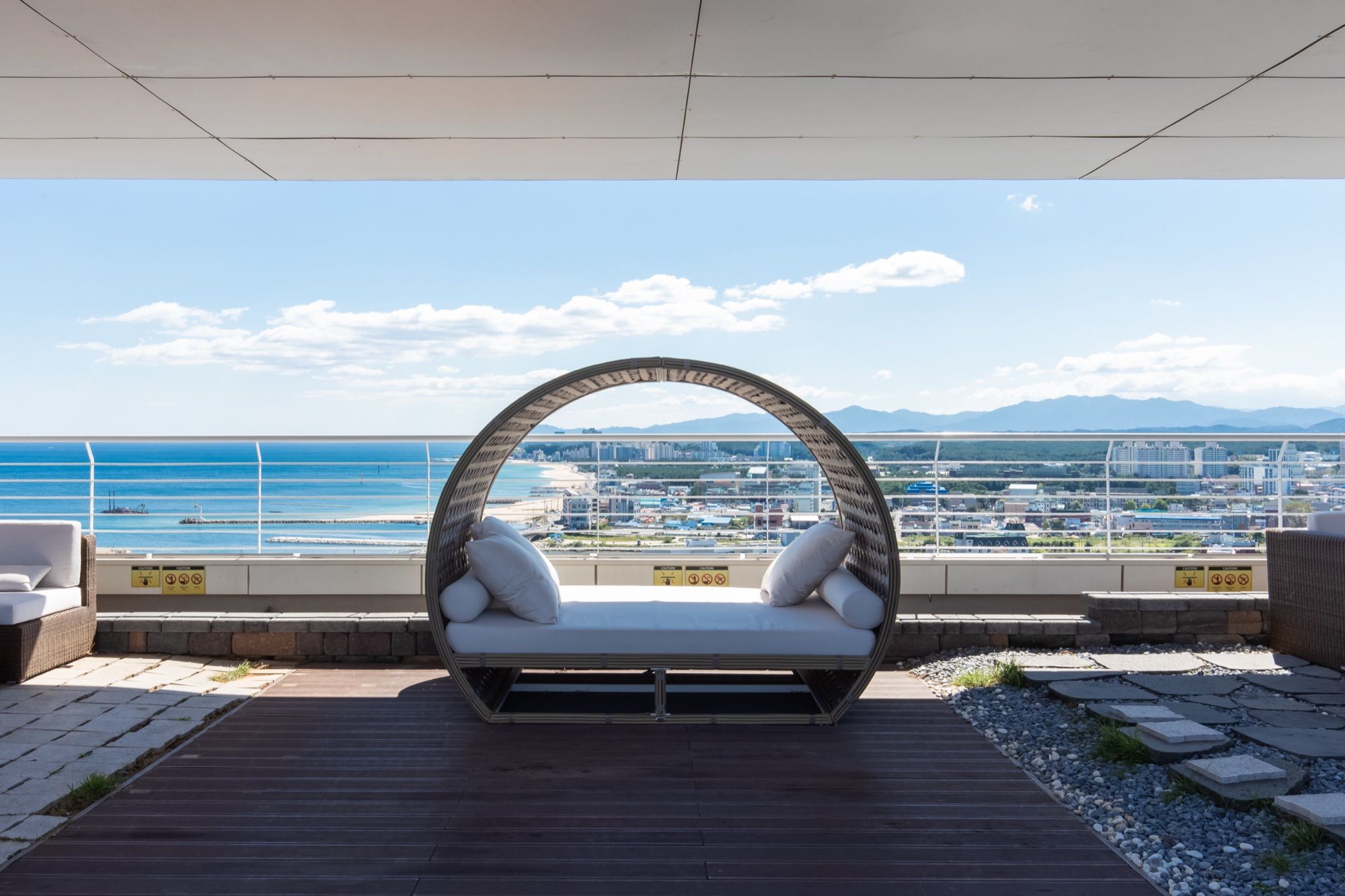
Gangneung faces the East Sea, about two hours from Seoul by KTX. The Jeongdong-Simgok Badabuchae trail follows 2.86 km of cliffs on a former military patrol path, and Anmok Beach is lined with roasteries and cafés. Ojukheon House is where the scholar Yulgok was born and where his mother, Shin Saimdang, lived. Further north, Sokcho is a fishing port at the foot of Seoraksan National Park.
Gapyeong and Nami Island
Nami Island sits in a river a short ferry ride from Gapyeongnaru pier, with tree-lined avenues, galleries and cafés.
Jeonju
Jeonju Hanok Village has around 700 traditional hanok houses, Korea's largest hanok village and the only one inside a city.
Jeju
A volcanic island off the south coast, listed by UNESCO in 2007 for its volcanic landscape and lava tubes. On the northern shore of Jeju City, Yongduam is a rock worn by wind and waves into the shape of a dragon's head.
Busan
Korea's great port city. In Nampo-dong, Jagalchi Market is one of the largest seafood markets in the country, where you can eat fish straight from the stalls.
Gyeongju
The capital of the Silla kingdom for almost a thousand years, with temples, royal tombs and palace sites listed by UNESCO in 2000. Bulguksa Temple and Seokguram Grotto have their own UNESCO listing (1995).
Winter in Korea
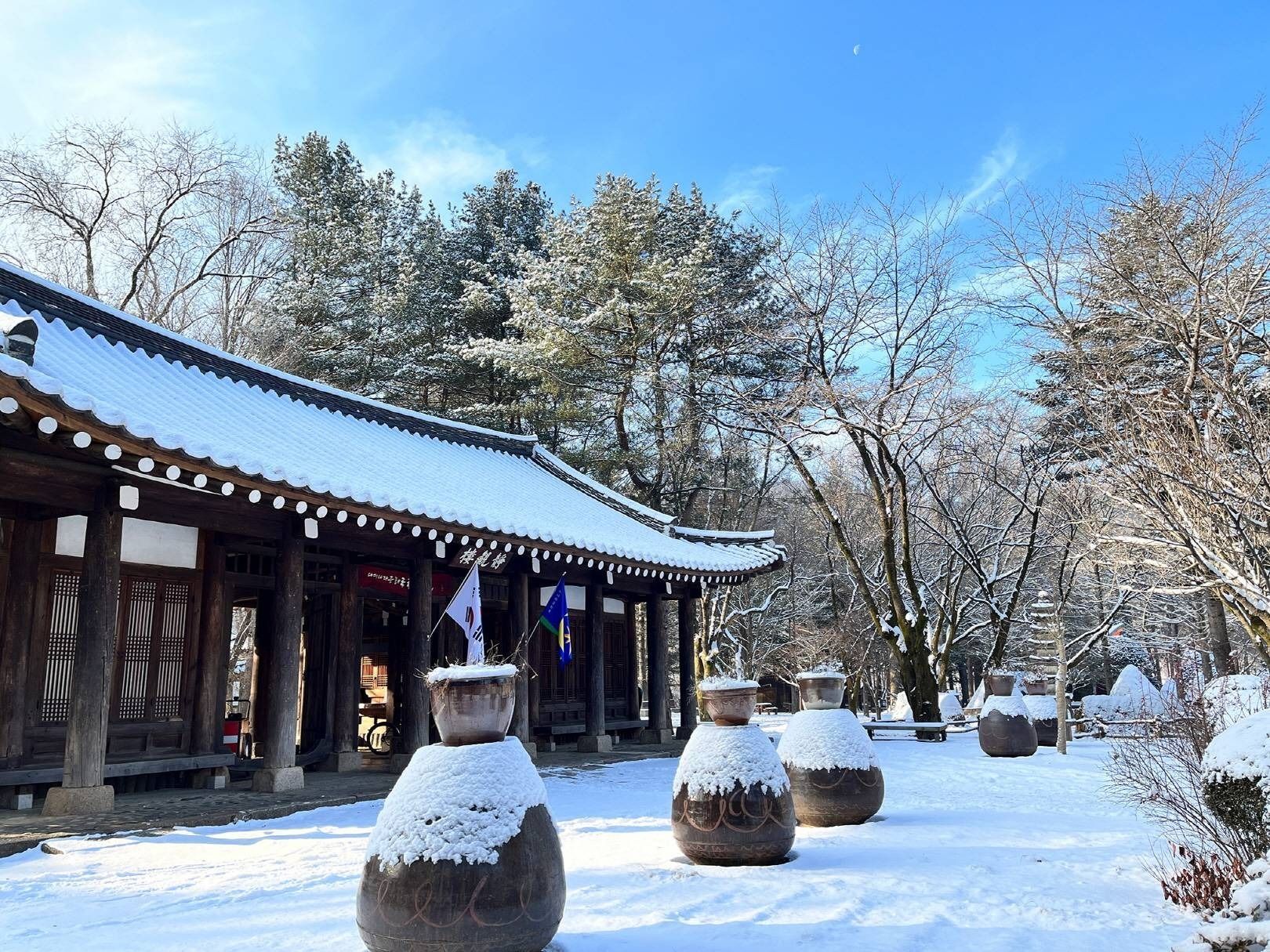
December to February is cold and dry on the mainland: in Seoul, February days reach about 3–5°C and nights fall below freezing, and Gangwon, on the east coast, is colder still, with snow in the mountains. Busan and Jeju are milder, with daytime highs of around 9–10°C. Pack a warm coat, gloves and layers.
Good to know
- Language: Korean
- Currency: Korean won (KRW)
- Time: UTC+9, all year (9 hours ahead of the UK in winter)
- Electricity: 220 V, two round-pin plugs (types C and F). Bring a UK adaptor
- Getting around: KTX high-speed trains link Seoul with Gangneung, Busan and Gyeongju; Jeju is a short flight from the mainland